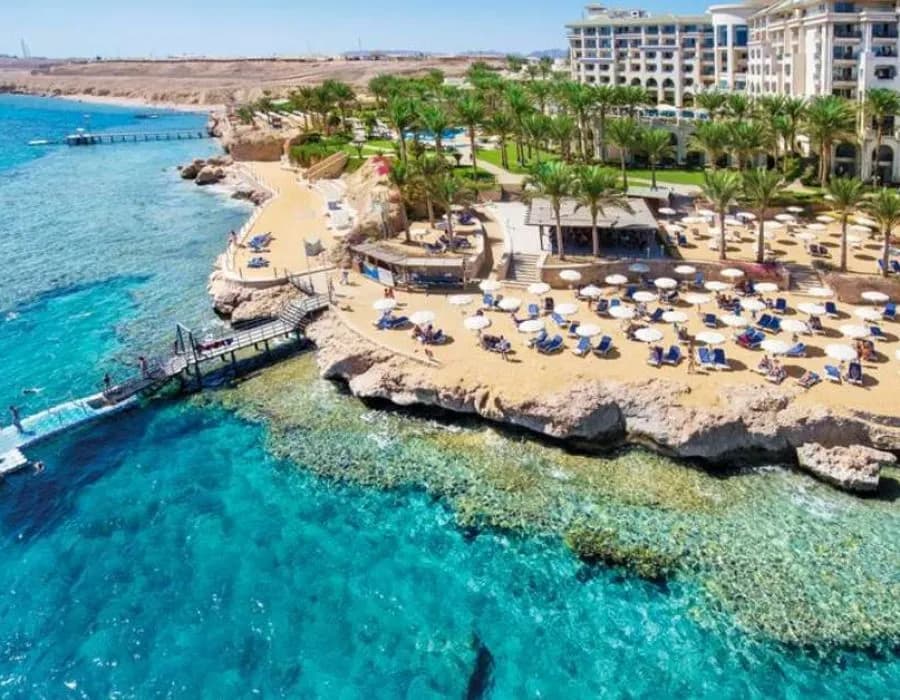
Sharm el-Sheikh is where the Red Sea stops being quiet — mega-resorts, international tourists, and everything organized for maximum convenience and minimum adventure.
The city did not exist 30 years ago. In the early 1990s it was a small settlement. By the 2000s it had become the Red Sea's primary resort destination, and by 2010 it was a full city with international hotel chains, shopping malls, a marina with mega-yachts, and infrastructure designed for volume tourism. The growth was rapid and relentless. The result is a place that feels more like Miami than Egypt — organized, developed, international, and entirely designed for tourists.
Most visitors come for the diving. Sharm offers access to world-class Red Sea sites — Ras Muhammad, Tiran Strait, Jackson Reef — that are genuinely exceptional. The infrastructure for diving is mature; dozens of shops operate, competition is fierce, and the diving itself is often outstanding. But you pay international prices. Divers doing two tanks per day across multiple days spend $500+ USD. For the same budget in Dahab, you could dive twice as many days.
The town divides into Naama Bay (the main tourist bubble), Old Town (quieter and less touristy), and scattered resorts around the coastline. Most international tourists never leave their resort. Some never leave the Naama Bay bubble. The people who actually know Sharm make it to Old Town, eat at local restaurants, and understand that the development is a thin veneer over Egyptian reality.
Two to three nights is the right duration. One day for a Ras Muhammad or similar dive trip. One day for another dive or water-sports activity. A third day for exploring Old Town or taking a desert or heritage day trip. More than three nights in Sharm risks feeling like you are managing logistics rather than experiencing the place.
What nobody tells you
Sharm is expensive compared to alternatives. Dahab and Hurghada offer equivalent diving at lower prices. Sharm's premium is for convenience and international infrastructure — which is valuable if you have limited time, but not if you have flexibility.
All-inclusive resorts are a trap. The food is mediocre, drink options are limited, and you pay inflated room rates because the package includes meals you do not want. Book a regular hotel, eat in Old Town, and spend half the money for better food and more freedom.
The mega-resorts are isolating. Many visitors to Sharm see nothing but the resort pool and the reef on dive boats. The actual town, the actual people, and the actual Egypt are invisible. If you want to understand Egypt, leave the resort.
Ras Muhammad is crowded. On popular days, dozens of boats congregate at the same sites. The diving is still excellent, but the underwater experience includes many other divers. Early morning departures are less crowded than mid-morning ones.
Dahab is better for budget divers. If you are planning 4+ days of diving, Dahab is dramatically cheaper — both accommodation and diving — and the atmosphere is less corporate. You sacrifice convenience and infrastructure, but gain culture and cost savings.
Old Town is where the town actually is. Naama Bay is designed entirely for tourists. Old Town is where residents live, where the real restaurants are, and where the actual city reveals itself. A taxi from Naama Bay costs EGP 20–30; it is worth the trip.
The nightlife is available but touristy. Sharm has bars, clubs, and nightlife infrastructure catering to European package tourists. It is available; it is not Egypt. If nightlife is your goal, the resort bars are safe and convenient; if you want authentic experience, this is not the place.
The Red Sea's best diving may not be in Sharm. The sites are world-class, but Dahab's Blue Hole, Hurghada's house reef, and other locations offer equally good diving at a fraction of the cost. Choose Sharm for convenience, not for diving quality.