
Cairo: Why It Still Wins
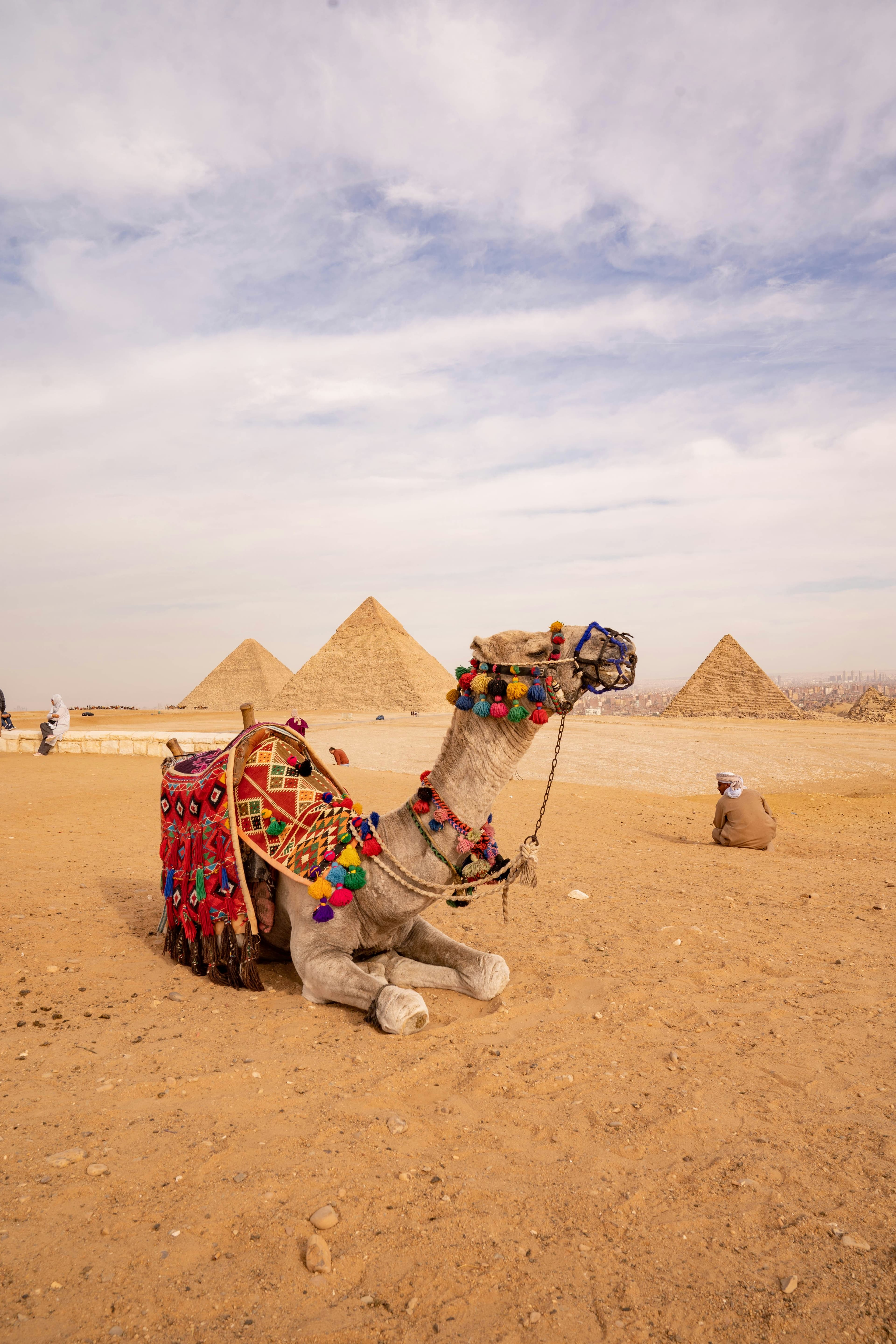
The taxi driver who picked you up from Cairo Airport at 2am had three things on his dashboard: a small Quran, a photo of his daughter, and a pine-tree air freshener from 2019. He took the ring road at 140km/h while calling his wife, pointing out the window at the distant glow of the pyramids — those pyramids, casually visible from a motorway — and said, without irony: "Welcome to the greatest city on Earth."
He wasn't entirely wrong.
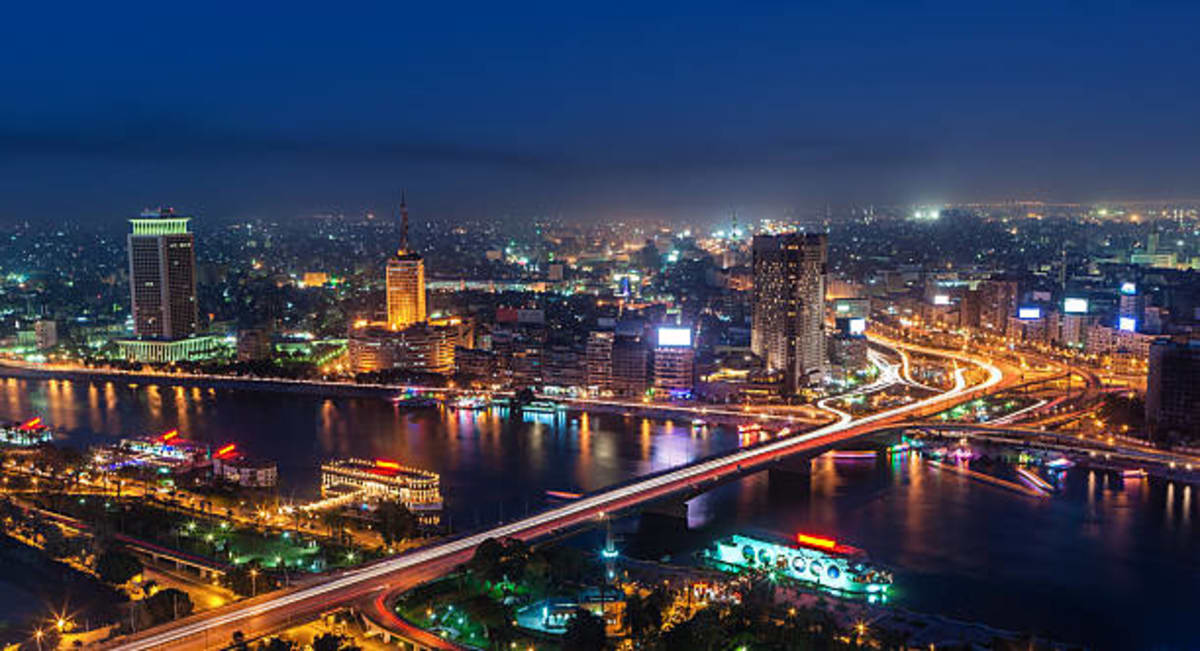
Cairo is not a city that eases you in. It drops you directly into the deep end — twenty million people, a skyline of minarets and cranes and unfinished concrete, a river that has watched every empire rise and collapse since before Europe had cities. It is loud, layered, occasionally chaotic, and completely impossible to be indifferent about. Travelers who come expecting a museum with traffic leave stunned by something else entirely: a living city that happens to contain the most extraordinary concentration of human history on the planet.
The honest version: Cairo has friction. The traffic is real, the hustling around tourist sites exists, and summer heat in July will make you genuinely reconsider your life choices. But every world-class city has its version of this — and Cairo's rewards are so disproportionately large that the friction becomes, in retrospect, part of what made it unforgettable.
This guide is not for the two-day Cairo stopover crowd. It's for travelers who want to understand the city — who want to eat where locals eat, sleep in neighborhoods that have actual character, and walk through Islamic Cairo at 7am before the tour groups arrive. If you've read the standard guides and felt like something was missing, you were right. Something was.
The city in one honest paragraph
Cairo is the capital of Egypt and, by most counts, the largest city in Africa and the Arab world — somewhere between 20 and 22 million people depending on where you draw the metropolitan boundary. It sits at the point where the Nile Valley opens into the Delta, which is why every civilization that mattered built something here. The Pharaohs built at Giza and Saqqara. The Romans fortified Babylon-in-Egypt, which became the nucleus of Coptic Cairo. The Arab conquest in 641 CE founded Fustat nearby. The Fatimids built Al-Qahira — "The Victorious" — in 969 CE, which gave the city its modern name. The Ottomans, the French under Napoleon, the British, and then the modern Egyptian Republic all left their architectural and cultural fingerprints on top of each other. The result is not a city — it's a stratigraphic record of human civilization, still inhabited, still arguing, still making excellent ful medames at 6am.
Who this guide is for
This guide is written for independent travelers aged roughly 28–45 who've done enough travel to know what they actually want — which is not a coach tour, not a sanitized resort experience, and not a highlight reel that skips the texture. You want to navigate Cairo on your own terms. You want to know which neighborhoods to base yourself in, which experiences justify the hype, where to eat food that didn't appear on a tourist menu, and what nobody tells you until you've already made the mistake.
Solo travelers — including solo women — will find specific, honest guidance throughout. Cairo is navigatable and largely safe when you know what you're doing. This guide will make sure you know what you're doing.
Getting to Cairo
By air
Cairo International Airport (CAI) is the main hub, served by EgyptAir and a wide range of European, Gulf, and African carriers. Direct flights operate from London, Paris, Frankfurt, Amsterdam, Dubai, Doha, and most major African hubs. From the US, you're typically connecting through a European or Gulf city.
Flight time benchmarks: London ~5 hours. Frankfurt ~4.5 hours. Dubai ~3 hours. New York (via connection) ~13–16 hours total.
Budget carriers including Wizz Air, Ryanair (from select European cities), and flydubai serve Cairo seasonally. Fares from European cities start around $80–150 one-way in low season; expect $200–300+ in peak winter travel months (December–February).
Book EgyptAir for direct intercontinental routes cautiously — the airline has improved significantly but baggage handling and lounges still lag behind Gulf carriers on the same routes. For the flight itself, it's perfectly fine.
Visa and arrival
Most nationalities can obtain a Visa on Arrival at Cairo Airport — cost is $25 USD, paid in cash (USD, EUR, or GBP accepted). The process is straightforward: join the visa queue before passport control, pay at the bank window, receive your sticker, proceed to passport control. Budget 20–45 minutes depending on the queue.
E-visa alternative: Apply online at visa2egypt.gov.eg before departure. Cost is the same — $25 — but arrival is faster since you skip the bank queue entirely. Processing takes 3–7 business days. For busy travel periods, the e-visa is strongly recommended.
Citizens of select countries (including Jordan and some Arab League states) enter visa-free. Check current requirements before travel — policies change.
Airport to city
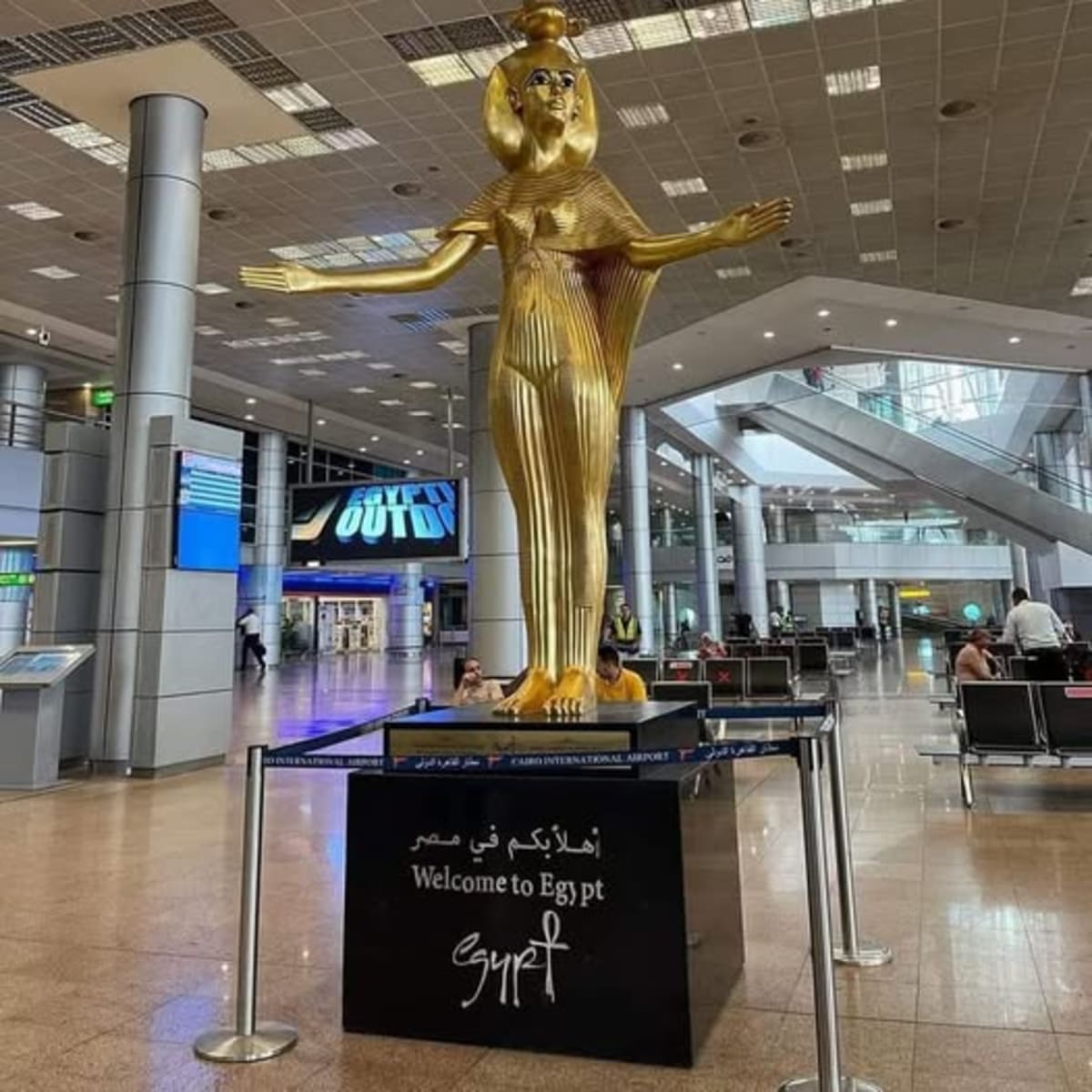
Cairo Airport sits in the northeast of the city, roughly 25–35km from Downtown Cairo depending on traffic — which in Cairo means the journey takes anywhere from 35 minutes at 5am to 90 minutes at 9am on a weekday.
Your three realistic options:
Cairo Metro (Line 3): The metro now connects directly to the airport at Al-Nozha station (Terminal 1 vicinity). Cost: 7 EGP (~$0.14). Clean, air-conditioned, and by far the cheapest option — but not convenient if you have large luggage or are arriving late at night. The metro runs until around midnight.
Uber/Careem: The most practical option for most travelers. Both apps work reliably from the airport. A ride to Downtown Cairo or Zamalek typically runs $8–15 USD depending on time of day and demand. Request from the designated ride-hailing area on the departures level (not arrivals — this is important). Avoid accepting offers from drivers approaching you inside the terminal.
Official taxi: White-painted metered taxis are available outside arrivals. Agree on a fare before getting in or insist on the meter — a fair price to Downtown is $10–15 USD equivalent. Yellow "London taxis" are also available and are metered by default.
If arriving for the first time, take Uber or Careem. The fixed app price removes any negotiation from what is already a long travel day. Save the metro for when you're navigating the city confidently.
The Neighbourhoods
Cairo doesn't have one center — it has several, each with its own character, price range, and practical logic. Choosing where to stay is the single biggest decision you'll make before you arrive, because it shapes your entire experience of the city.
Here's the honest breakdown.
Downtown and Garden City
Downtown Cairo (Wust el-Balad) is the 19th-century European-planned grid that the Khedive Ismail built to make Cairo look like Paris. It didn't entirely succeed, but what it produced is something more interesting — a dense, peeling, magnificent quarter of Belle Époque buildings, independent coffee shops, bookshops, and late-night restaurants that feels nothing like a tourist zone because it largely isn't one.
This is where you'll find Talaat Harb Square, the great Italian-designed landmark that functions as Downtown's unofficial center. The streets radiating from it — Qasr el-Nil, Talaat Harb Street, Mohamed Farid — are walkable, lively at all hours, and full of places to eat for under $5 a meal.
Garden City sits immediately south of Downtown, hugging a bend in the Nile. It's quieter, leafier, and home to several embassies and a handful of mid-range to luxury hotels. Slightly more expensive than Downtown for accommodation but significantly calmer.
Best for: First-time visitors who want to walk everywhere, budget and mid-range travelers, anyone interested in Cairo's architectural history. Watch out for: Some streets feel neglected after dark; stay on the main thoroughfares.
Zamalek
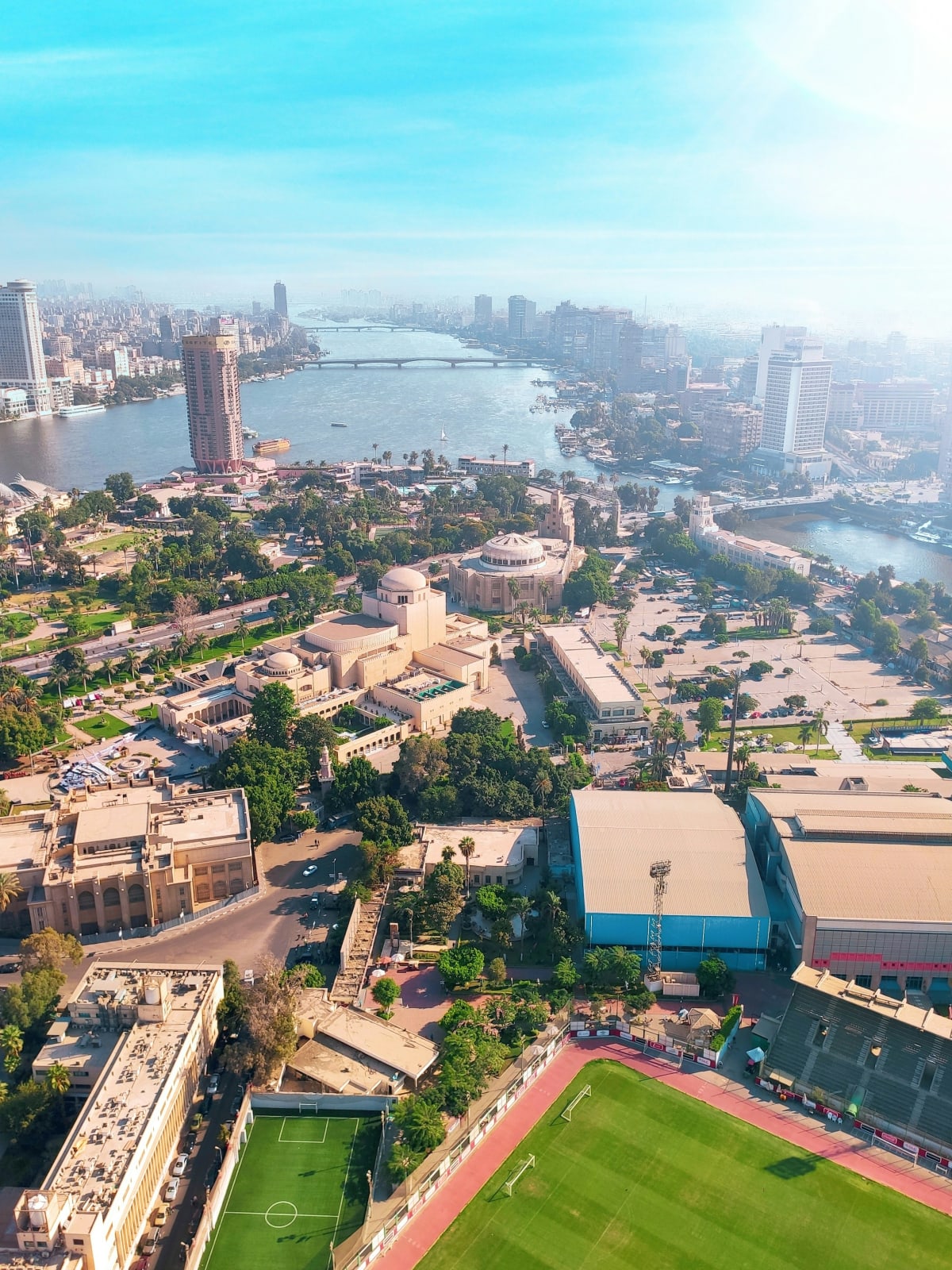
Zamalek occupies the northern half of Gezira Island — a Nile island connected to both banks by bridges — and it is, by a comfortable margin, the most pleasant neighborhood in Cairo to be based in. Tree-lined streets, embassies, art galleries, international restaurants, Cairo's best independent coffee scene, and a pace of life that feels several degrees calmer than the mainland.
The Cairo Tower is here — 187 meters, revolving restaurant at the top, and the best panoramic view of the city for about $7 entry (2026 prices). The Gezira Sporting Club occupies the southern half of the island, which is why Zamalek has open green space in a city that otherwise doesn't.
Accommodation in Zamalek runs 10–30% more expensive than equivalent properties Downtown. Worth it for longer stays or if you prioritize a walkable, low-hassle base.
Best for: Repeat visitors, solo female travelers, digital nomads, anyone who wants good coffee and walkable evenings.
Maadi
Maadi is Cairo's expat suburb — about 20 minutes south of Downtown by metro or Uber, and you'll know you're there when the streets suddenly have trees and the cafés start accepting cards. Large villas, a grid of quiet residential streets, international schools, and a concentration of Western restaurants and supermarkets make this the neighborhood where Cairo's foreign community has historically landed.
For the independent traveler, Maadi makes sense primarily for longer stays — a week or more. It's calm, practical, and well-connected. As a base for short visits, it's too far from the main historical sites.
Road 9 and Road 233 are the main commercial arteries — lined with restaurants, pharmacies, and the kind of low-key bars that stay open late without fuss.
Best for: Long-stay travelers, families, anyone who needs a calm base while working remotely.
Heliopolis and Nasr City
Heliopolis is Cairo's other Belle Époque project — a garden city built northeast of the center in the early 1900s, with distinctive Moorish Revival architecture that still gives certain streets a quiet grandeur. Korba, the neighborhood's commercial heart, has a walkable stretch of cafés, restaurants, and a local life that feels entirely divorced from tourism.
Nasr City, adjacent and more modern, is primarily residential and commercial — important to know about mainly because several mid-range hotels here offer better value than Downtown equivalents while being reasonably connected to the airport.
Best for: Budget travelers near the airport, travelers interested in Cairo's non-tourist urban texture.
Zamalek's best coffee is not in a café — it's at Diwan Bookshop on Sharia 26 July, where a small espresso bar tucked among the shelves serves consistently excellent filter coffee at local prices (~60 EGP / ~$1.20). Most tourists walk past the entrance entirely.

Best Neighbourhoods to Stay in Cairo: A Local's Breakdown
If you're visiting for fewer than five days, choose Zamalek or Downtown without overthinking it. For stays of a week or more, consider splitting — two nights in Zamalek to orient yourself, then move to a quieter base if the energy of central Cairo starts to wear thin.
The Unmissable Experiences
A woman at a café in Zamalek once said it best: "I've lived in Cairo my whole life and I still haven't seen everything." She wasn't being modest. Cairo's historical density is genuinely overwhelming — there are more pharaonic, Islamic, Coptic, and colonial-era sites within the city limits than most countries contain in their entirety.
So this is not a list of everything. It's a list of four experiences that justify the flight, survive the hype, and reward the traveler who approaches them with the right timing and the right information.
Giza Plateau
Let's get the obvious question out of the way: yes, they're as impressive as you think. More impressive, actually. No photograph — including the famous ones taken from the road where the Pizza Hut is visible — prepares you for the physical scale of the Great Pyramid of Khufu. At 138 meters, it was the tallest structure on Earth for nearly 4,000 years. Standing at its base and looking up at the limestone blocks, each averaging 2.5 tonnes, produces a specific kind of cognitive short-circuit that no other site in the world quite replicates.
The Giza Plateau contains three main pyramids — Khufu, Khafre, and Menkaure — plus the Great Sphinx, the Solar Boat Museum, and a scattering of mastaba tombs. The standard visit takes 3–4 hours. A thorough visit with interior access takes a full day.
Tickets (2026): General plateau entry is $18 USD. Entry to the Great Pyramid interior is an additional $30. The Solar Boat Museum is $10 separately. Book online at egy.gov.eg when possible — ticket queues at the gate can add 45 minutes.
Timing is everything. Gates open at 8am. Arrive between 7:45am and 8:15am and you'll have approximately one hour before the first tour buses arrive. By 10am, the plateau is crowded. By noon in summer, it is genuinely punishing — 45°C on exposed limestone with no shade. The plateau is also open for sunset visits (until 5pm in winter, 7pm in summer) — this is when the light is extraordinary and crowds thin significantly.
The camel situation: Camel and horse handlers operate on the plateau perimeter. They are persistent and they will approach you. A short camel ride for photos runs $10–20 USD — agree on the price before you mount, confirm it includes dismounting, and decline firmly and cheerfully if you're not interested. A clear "no thank you" repeated once is sufficient. This is a normal part of visiting any major site in the world; it's not unique to Egypt, and it resolves quickly.
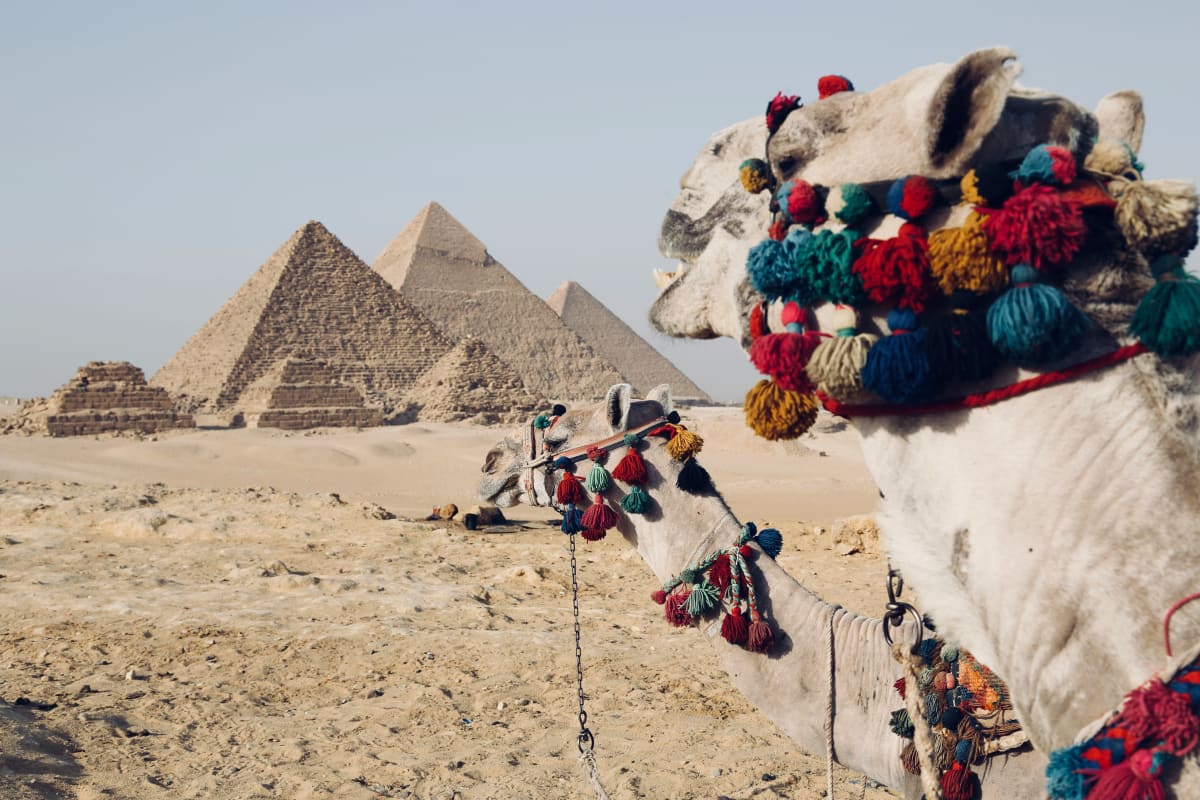
The best photograph of all three pyramids is not taken from inside the plateau. It's taken from the desert ridge to the southwest — accessible via the road that loops around the back of the plateau past the Panorama restaurant. Uber there directly, shoot at sunrise or sunset, then enter the plateau proper through the main gate.
The Grand Egyptian Museum & The Egyptian Museum on Tahrir
By 2026, Cairo has two museum experiences — and the order in which you visit them matters.
The Grand Egyptian Museum (GEM) — Start Here
The Grand Egyptian Museum near Giza is now the primary destination for anyone visiting Cairo's antiquities. Opened in phases since 2023 and fully operational by 2026, it is the largest archaeological museum on earth — 500,000 square metres built on the plateau within sight of the pyramids, housing the complete Tutankhamun collection for the first time in history.
The numbers are genuinely staggering: 5,398 individual objects from Tutankhamun's tomb, displayed together in purpose-built galleries, including the gold burial mask, the nested coffins, the golden throne, the alabaster canopic jars, and thousands of objects that have never been on public display before. When Howard Carter excavated the tomb in 1922, it took his team ten years to catalogue everything. You will need at least 90 minutes for the Tutankhamun galleries alone if you are doing them properly.
The Great Hall atrium is an architectural event before you have looked at a single exhibit — a 20-metre standing colossus of Ramesses II at its centre, visible the moment you enter, with natural light coming through the angled ceiling above it.
<PostCard slug="gem-complete-guide" title="The Grand Egyptian Museum: How to Visit, Book, and What Not to Miss" />
Practical information:
- Tickets must be booked online in advance — walk-up availability is limited, especially on weekends and public holidays
- Book at visit-gem.com or through your hotel concierge at least 48 hours ahead
- General entry: from EGP 750 (~$15) — check current pricing when booking as it has increased progressively since opening
- Best days: Tuesday through Thursday, first session (doors open 9am)
- Budget: four hours minimum. The Tutankhamun galleries alone take 90 minutes done properly. The Children's Museum and temporary exhibitions add more
- Location: Al-Remaya Square, Giza — 10 minutes from the Giza Plateau entrance. Take Uber directly; do not accept rides offered near the pyramid gates
The Egyptian Museum, Tahrir Square — Still Worth It
The old Egyptian Museum on Tahrir Square is one of the most important collections of antiquities on earth, and one of the most chaotically organised museums you will ever visit. This is not entirely a criticism. There is something unexpectedly wonderful about turning a corner and finding a 3,000-year-old colossal statue standing in a corridor as though it wandered there itself.
With the Tutankhamun collection progressively transferring to GEM, the Tahrir museum's character has shifted — it is now less a blockbuster destination and more an immersive archive, a place where the depth and density of Egyptian history becomes viscerally clear precisely because nothing is curated for easy consumption. Over 100,000 objects remain across two floors. The labelling is inconsistent, the layout defies logic, and it is completely absorbing.
What stays at Tahrir and is worth your time:
The Royal Mummies Room — 27 pharaonic mummies including Ramesses II and Hatshepsut, displayed in a climate-controlled gallery with individual lighting. Separate ticket required (EGP 400 / ~$8 in 2026 — verify current pricing). Ramesses II, who ruled for 66 years and outlived twelve of his sons, is visibly, startlingly present. It is not a comfortable experience, in the best possible way.
The Amarna collection — objects from Akhenaten's revolutionary monotheist period, including the famous Nefertiti-era sculptural fragments. These are not transferring to GEM and are among the most historically significant objects in the building.
The ground floor animal mummies and sacred objects — crocodiles, cats, ibises, and baboons in varying states of wrapping, displayed in wooden cases that have not been updated since the 1970s. Genuinely strange and genuinely ancient.
Practical information:
- General entry: EGP 400 (~$8) — Royal Mummies Room is separate
- No advance booking required — tickets at the gate
- Best time: weekday mornings, first hour after opening (9am)
- Allow 2–3 hours for a serious visit; 90 minutes if you are focused
- The museum shop in the basement has the best selection of Egyptology books in Cairo
Which one, and in what order
If you have one day for museums: GEM only. The Tutankhamun collection at full scale is the reason, and the building itself is worth half the visit.
If you have two days or more: GEM first, Tahrir second. The old museum makes more sense after you have seen the new one — the contrast between the two experiences, separated by 120 years of museological thinking, tells its own story about how Egypt has chosen to present itself to the world across different eras.
If you are short on time and have already seen the Tutankhamun objects elsewhere: Tahrir only, Royal Mummies Room specifically. There is nothing like it in any other museum on earth. [FAST_FACT: The golden death mask of Tutankhamun weighs 11 kilograms and is made of solid gold inlaid with lapis lazuli, carnelian, and obsidian. It was discovered in 1925 by Howard Carter — three years after the tomb was first opened in 1922.]
Visit the Egyptian Museum on a Friday morning. Friday is the Egyptian weekend — most locals are not sightseeing, and tour groups typically visit mid-week. You'll share Tutankhamun's galleries with a fraction of the usual crowd.
Islamic Cairo and Khan el-Khalili
Most travelers arrive in Khan el-Khalili expecting a souvenir market and leave having accidentally walked into one of the most architecturally extraordinary urban environments in the world.
Al-Muizz Street, which runs north through the heart of Islamic Cairo, is a 1km stretch of medieval architecture so dense and well-preserved that UNESCO declared the district a World Heritage Site. Mamluk and Fatimid mosques, caravanserais, sebils (public water fountains), and merchant houses line both sides. The street was the main artery of medieval Cairo for a thousand years. Walking it at 7am — before the vendors set up, before the tour groups arrive, in the cool early light — is one of the genuinely great urban experiences available in the world right now.
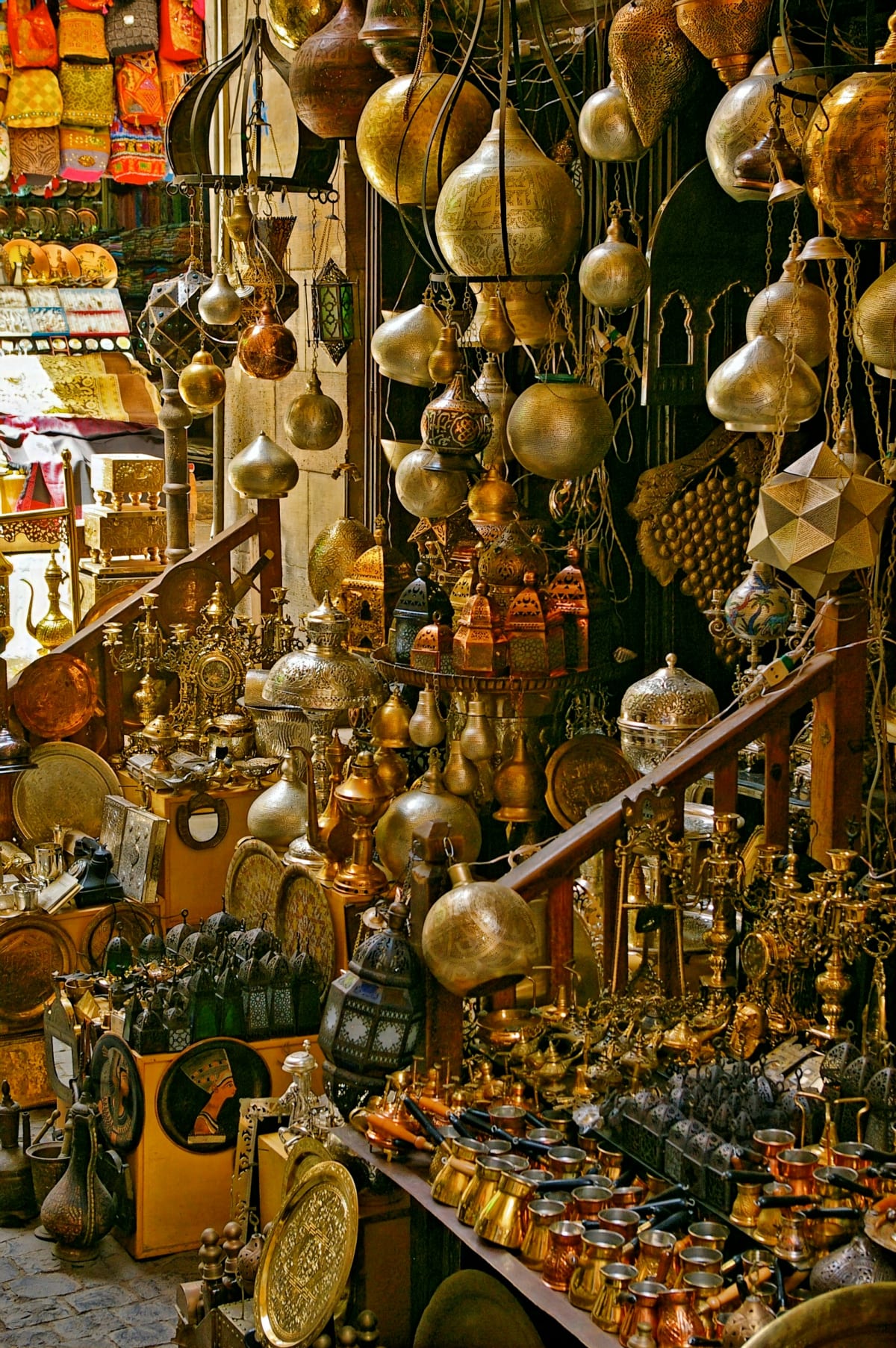
Khan el-Khalili itself, the bazaar that branches off Al-Muizz Street, dates to 1382. It is genuinely old, genuinely atmospheric, and yes, genuinely designed to sell things to tourists. Both things are simultaneously true. The spice market section — Sharia el-Muski running west — is more local, more chaotic, and more interesting if you want to see Cairo functioning as a city rather than a heritage site.
What to buy: Papyrus quality varies enormously — genuine papyrus feels stiff and slightly textured; banana-paper imitations feel soft and flexible. Copperwork, brass lamps, and hand-painted ceramics from established shops are consistently good value. Perfume oil vendors are talented salespeople; enjoy the performance, negotiate hard, and don't feel obligated.
The Mosque of Al-Azhar and the Mosque of Ibn Tulun are the two unmissable religious sites in the area. Al-Azhar — founded in 970 CE, the oldest university in the world still in operation — is free to enter outside prayer times and produces a specific quality of silence inside its courtyard that the chaos of the surrounding streets makes all the more striking. Ibn Tulun, in the adjacent Sayyida Zeinab district, is older still (879 CE) and less visited — the view from its minaret over old Cairo is one the city's most photogenic and least photographed.
The café El-Fishawy in the heart of Khan el-Khalili has been open continuously since 1773 and is genuinely, not performatively, historic. Order the karkadeh (hibiscus tea, hot or cold) and sit for 20 minutes. Ignore anyone who says this is a tourist trap — the locals sitting next to you at 11pm suggest otherwise.
Khan el-Khalili: How to Shop Without Getting Played
Coptic Cairo
A ten-minute metro ride south of Downtown, Coptic Cairo occupies a walled compound that has been continuously inhabited since the Roman fortress of Babylon was built here in the 1st century CE. Egypt's Christian community — the Copts, who make up roughly 10% of the population — has maintained an unbroken presence on this site for two millennia.
The Hanging Church (Al-Muallaqah) is the most visited — a 7th-century church built atop the gatehouse towers of the Roman fortress, its nave suspended between them. The interior is extraordinary: a wooden iconostasis inlaid with ivory, Coptic icons in the Byzantine tradition, and a quality of light through the upper windows that architecture writers struggle to describe without reaching for the word "sacred."
The Coptic Museum next door contains the world's finest collection of Coptic art — textiles, manuscripts, icons, and stonework from the 3rd to the 13th centuries. Entry is $8 USD and the museum is rarely crowded. Budget 90 minutes.
The compound also contains several other churches, a synagogue (the Ben Ezra Synagogue, built on the site where tradition holds that Moses was found in the bulrushes), and a Coptic cemetery. The whole area can be walked in two to three hours at an unhurried pace.
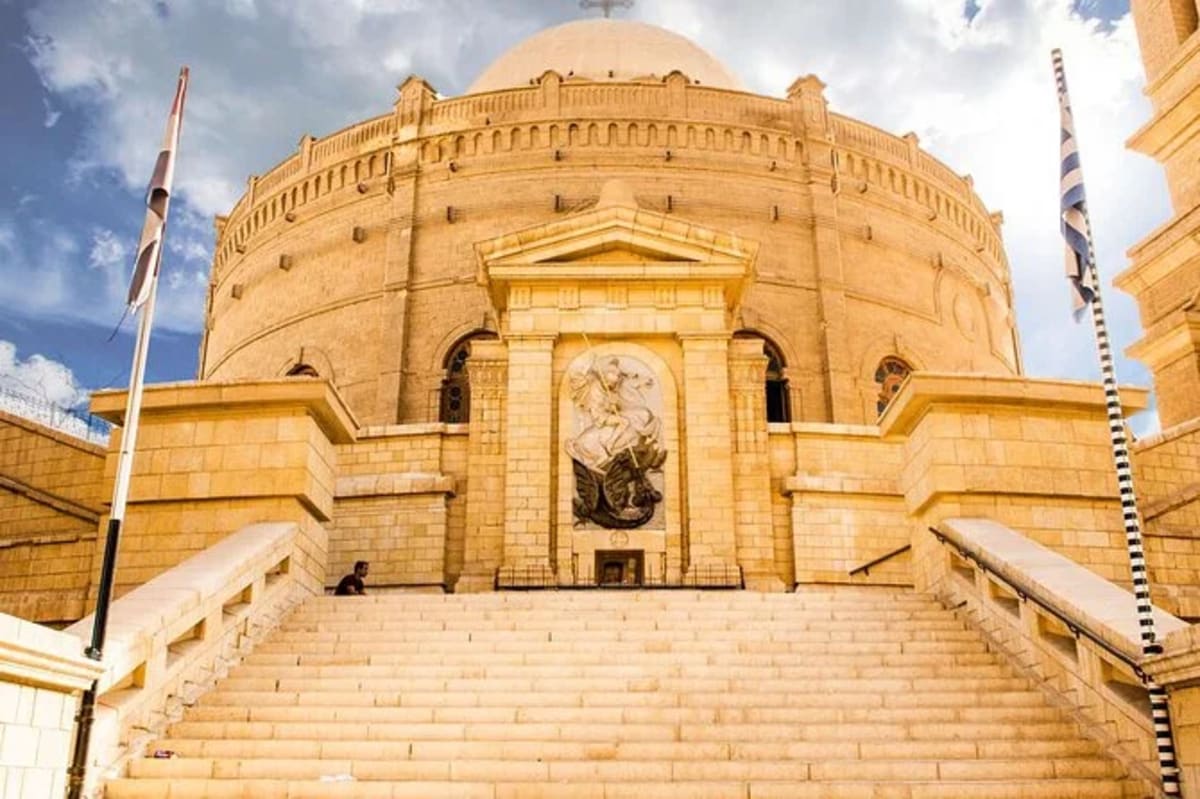
Coptic Cairo is best visited on Sunday morning, when services are held at the Hanging Church and several smaller chapels. You are welcome to observe quietly from the back. The sound of the Coptic liturgy — sung in a language descended directly from ancient Egyptian — inside a Roman fortress that predates Islam is a layering of history that no exhibit or guided tour can replicate.
Where to Eat
Cairo's food scene is one of the most underrated in the world. This is not a controversial statement once you've eaten here — it just takes eating here to understand it. The city has a street food culture of depth and variety, a growing independent restaurant scene anchored by Egyptian chefs cooking Egyptian food seriously, and a handful of elevated dining experiences that would hold their own in any major European city.
What follows is not an exhaustive list. It's a starting point organized by how you'll actually move through the city.
Street food essentials
Ful and ta'ameya are the non-negotiable starting point. Ful medames — slow-cooked fava beans with olive oil, cumin, and lemon — is Egypt's national dish in the truest sense. It's eaten at breakfast, as a snack, as late-night fuel. A serving costs $0.50–1.50 USD from a street cart or fuul shop. Ta'ameya (Egyptian falafel, made from fava beans rather than chickpeas, which produces a distinctly greener, more herbaceous result) comes alongside it or wrapped in bread as a sandwich.
Where to eat it: Koshary Tahrir near Tahrir Square is the best-known koshary institution — koshary being Egypt's other national staple, a carb-on-carb assemblage of pasta, rice, lentils, fried onions, and spiced tomato sauce that costs $1.50–2 USD and shouldn't work as well as it does. For ful, any neighborhood fuul shop open before 10am is reliable — look for the giant brass pot on the stove and the queue.
Hawawshi — spiced minced meat baked inside bread until the crust is shatteringly crisp — is the street food that visitors consistently discover on day two and eat every subsequent day. Available from bakeries in most neighborhoods for $1–2 USD per piece.
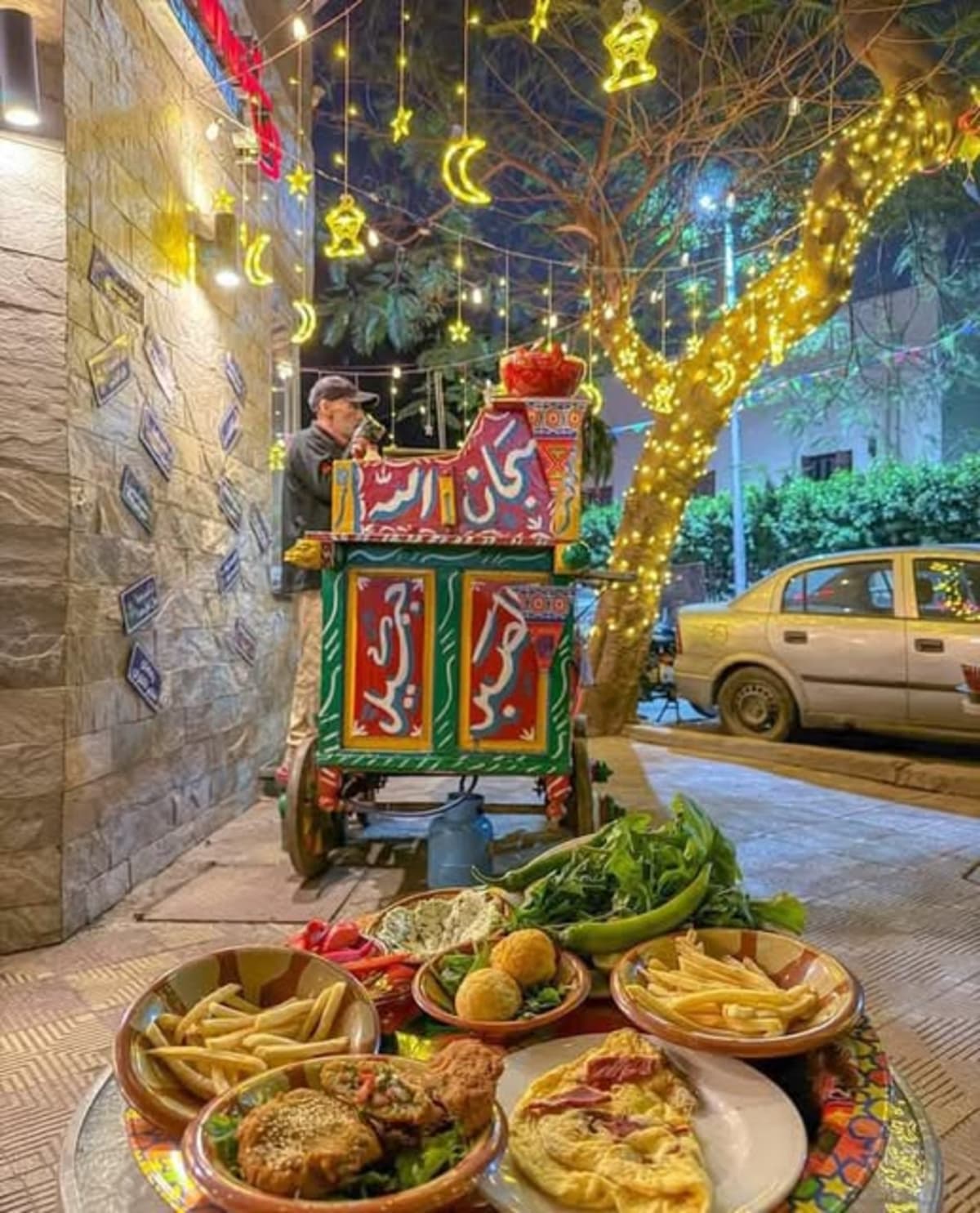
The best ta'ameya in Cairo is in Bab el-Luq market, the covered market just south of Tahrir Square. Go before 9am. The stall with the longest queue of people who are clearly on their way to work is the one you want.
Sit-down locals' picks
Abou El Sid in Zamalek is the reference point for elevated Egyptian home cooking — dishes like molokhia (a silky green herb stew with rabbit or chicken), hamam mahshi (stuffed pigeon), and om ali (a bread pudding with cream and nuts). The interiors are deliberately theatrical — dark wood, brass lamps, vintage Egyptian photographs. Mains run $8–18 USD. Book ahead for weekend evenings.
Zooba is the more modern, street-food-elevated alternative — a fast-casual Egyptian concept that has taken traditional staples and applied the kind of careful sourcing and presentation that makes international food media take notice. Multiple locations; the Zamalek branch is most convenient for most visitors. Expect to spend $6–12 USD for a full meal.
For grilled meats, Kebdet el-Prince in Downtown — a small, no-frills liver-and-kebab institution — is the honest local choice. Liver sandwiches cost under $2 USD. The atmosphere is zero pretension and entirely authentic.
Rooftop and splurge
Cairo's Nile-view dining scene has improved significantly in the past five years. Sequoia at the northern tip of Zamalek Island is the benchmark — open-air, Nile-facing, consistently good mezze and grills, and a setting that justifies the price premium. Dinner for two runs $40–70 USD depending on drinks. The wait for a Nile-side table on weekend evenings can be 45 minutes — arrive at opening (7pm) or book ahead.
Taboula in Garden City is the Lebanese-Egyptian crossover restaurant that Cairo's food community regards as one of the most consistently excellent tables in the city. Smaller, quieter than Sequoia, and slightly more focused on the food than the view. Budget $20–35 USD per person.
Cairo's alcohol licensing situation is worth understanding before you arrive. Alcohol is legally available at licensed restaurants, international hotels, and specific bottle shops — but not at the majority of Egyptian-owned restaurants or street food establishments. If a restaurant's menu doesn't include a drinks list, assume it's dry. This is perfectly normal and widely observed without tension. Imported beer and local Stella beer (Egypt's dominant domestic brand, reliably drinkable) run $4–8 USD at licensed venues.
For the best Nile view in Cairo at the lowest possible price, take the Nile ferry from Maspero dock (Downtown) to the opposite bank and back. Cost: $0.10 USD. The ten-minute crossing at sunset, with the city and the river in that light, is the kind of thing that ends up as the photo you actually show people when you get home.
Where to Stay
A traveler once checked into a budget hotel in Downtown Cairo, walked to the window, and found herself looking directly at a minaret close enough to read the Arabic calligraphy on its tiles. The call to prayer started twenty minutes later — 5am, louder than anything she had experienced in four years of travel, shaking the glass slightly in its frame. She gave it four stars on Booking.com and came back the following year.
Where you sleep in Cairo shapes everything. The neighbourhood choice matters — covered in detail above — but so does the category. Cairo's accommodation market spans a wider quality and price range than almost any comparable city, and the middle tier in particular has improved significantly since 2022.
Budget
Cairo's budget accommodation scene is anchored by Downtown and, to a lesser extent, Zamalek — two neighbourhoods where older apartment buildings have been converted into guesthouses and small hotels that offer genuine character at prices that feel almost implausible by European standards.
The Pension Roma on Sharia Mohamed Farid in Downtown is the benchmark. Family-run since 1947, eleven rooms, high ceilings, original tiling, a breakfast served in a dining room with oil paintings and a grandfather clock. Doubles from $28–40 USD per night depending on season. Book directly — it fills up weeks in advance and doesn't always appear on aggregators.
Ismailia House Hotel, also Downtown, is the reliable fallback — clean, central, and staffed by people who have been answering the same questions from travelers for twenty years and remain helpful anyway. Doubles from $22–35 USD.
For Zamalek on a budget, Longchamps Hotel on Sharia Ismail Mohamed offers air-conditioned rooms, a quiet street location, and proximity to Zamalek's café scene. It is not glamorous. It is, however, well-run and significantly calmer than Downtown equivalents. Doubles from $35–50 USD.
Budget hotels in Cairo rarely include breakfast in the price, but the street food within walking distance costs $1–3 USD for a full meal. Don't pay extra for hotel breakfast unless the alternative is eating nothing before a 7am Giza visit.
Mid-range
The $50–120 USD per night bracket in Cairo offers the most interesting options — properties where the design, location, and service all converge into something that feels specific to Cairo rather than generic international hospitality.
Hotel Longchamps crosses budget and mid-range depending on season. The cleaner mid-range entry point is Kempinski Nile Hotel Garden City — not a budget option, but at the lower end of this tier it offers Nile views, a serious pool, and a location in Garden City that is walkable to Downtown and Coptic Cairo. Rates from $95–140 USD depending on season and booking window.
For Zamalek specifically, Sofitel Cairo El Gezirah occupies the southern tip of Gezira Island with panoramic Nile views from most rooms. It straddles mid-range and luxury — rooms from $110–180 USD — but the location is unmatched, the pool is excellent, and the breakfast buffet is the kind that makes you genuinely reconsider your morning plans.
Cairo Capital Hotel and Spa in Downtown is the most design-forward mid-range option in the centre — a restored heritage building with original architectural details, a rooftop terrace, and a food and beverage operation that draws locals as well as guests. Doubles from $70–110 USD.
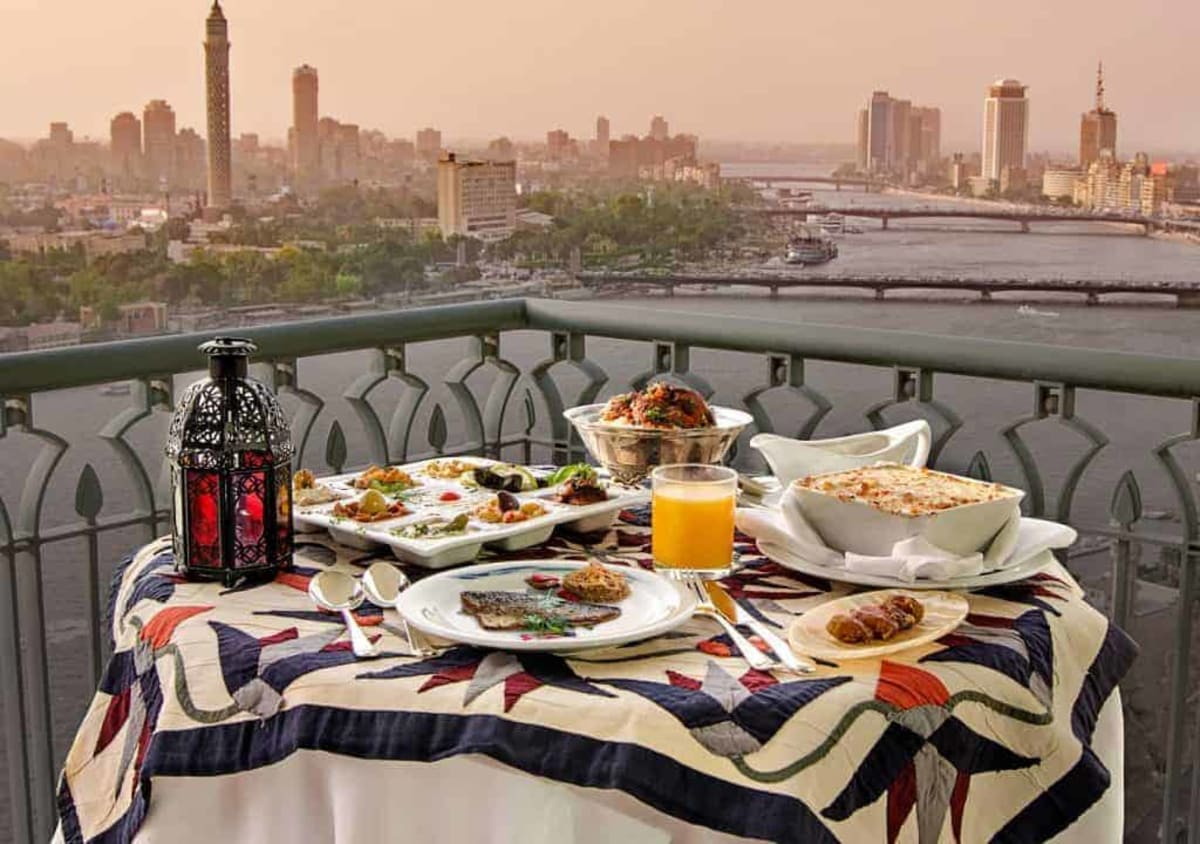
Cairo hotel pricing is highly elastic. The same room that costs $90 USD in February (peak season) can drop to $55 USD in June. If you have flexibility on travel dates, the shoulder seasons — April/May and September/October — offer the best combination of weather, crowd levels, and accommodation pricing.
Luxury
Cairo's luxury tier is anchored by several properties that have been operating at the top of the market for decades and a handful of newer entrants that have raised the ceiling considerably.
The Nile Ritz-Carlton on Tahrir Square is the reference point — a complete renovation of the historic Nile Hilton building, opened as a Ritz-Carlton in 2019. The location is unbeatable: Tahrir Square on one side, direct Nile frontage on the other, within walking distance of the Egyptian Museum and Downtown. Rooms from $200–380 USD per night; suites considerably higher. The rooftop pool with Nile views is the best hotel pool in central Cairo.
Four Seasons Cairo at Nile Plaza in Garden City is the consistent preferred choice of the diplomatic and business community — understated, impeccably run, and with a riverfront setting that Nile Ritz-Carlton matches but doesn't surpass. Rates from $250–420 USD.
For something smaller and more characterful, Tamarai Nile Zamalek offers boutique luxury on the island — fewer rooms, more personal service, a rooftop bar and restaurant, and the specific advantage of a Zamalek address rather than a central Cairo one. Rates from $150–250 USD.
Cairo Hotels: The Honest Tier Guide for 2026
If luxury is the goal but budget is limited, book a standard room at the Nile Ritz-Carlton and spend the difference on a sunset drink at its Nile Bar — open to non-guests, with the best unobstructed Nile view of any hotel bar in Cairo. The same view, a fraction of the cost.
Getting Around
Cairo's traffic is infamous in the way that certain cities' weather is infamous — it becomes part of the legend, partly deserved, partly exaggerated by people who experienced it at the wrong hour on the wrong road. The reality is that Cairo is entirely navigable once you understand which tools to use when.
Metro
The Cairo Metro is the most underused resource available to visitors. Three lines, 99 stations, covers the vast majority of the city's tourist and residential areas, runs from 5:30am to midnight, and costs 7–13 EGP (under $0.30 USD) per journey regardless of distance.
Line 1 (red) runs north-south through the east of the city, connecting Heliopolis to Maadi. Line 2 (yellow) connects Shubra in the north to Giza in the south, stopping at Tahrir Square (for the Egyptian Museum), Opera (for Downtown and the Nile), and Cairo University. Line 3 (blue) runs northeast to the airport area and west toward Imbaba.
For visitors based in Zamalek, Downtown, or Garden City, the metro is the fastest way to reach Coptic Cairo (Mar Girgis station, Line 1), Giza (Cairo University or Giza station, Line 2), and the Egyptian Museum (Sadat station, Line 2).
Women traveling alone: Cairo Metro has dedicated women-only carriages — typically the first carriage at each end of the train. They are clearly marked. Use them if you prefer; mixed carriages are entirely normal and used by women throughout the day.
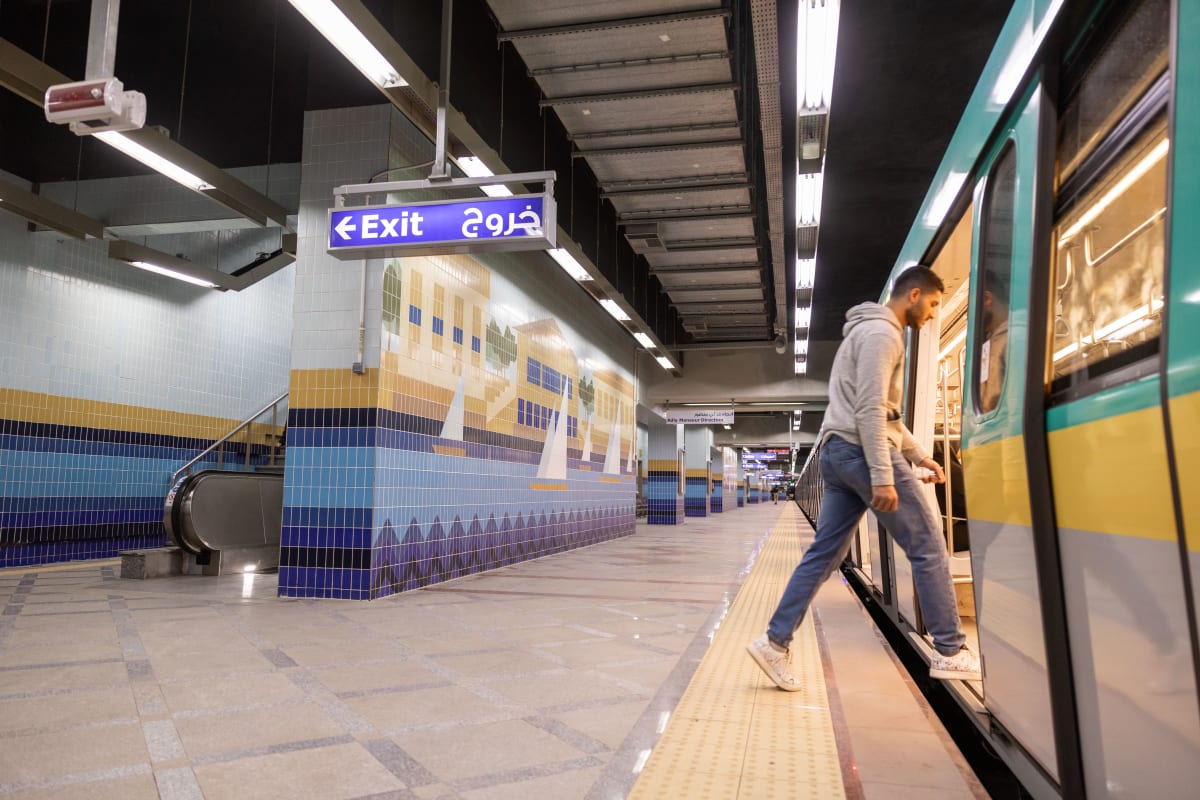
Buy a rechargeable metro card at any station rather than individual tickets. It costs $0.50 USD deposit and saves time at every entry. Reload it as needed. You won't spend more than $3–4 USD on metro rides in a week of normal sightseeing.
Ride-hailing
Uber and Careem both operate throughout Cairo and are the practical solution for any journey the metro doesn't cover conveniently — and there are many. Both apps work reliably, prices are displayed before confirmation, and drivers generally know the city well.
Typical fares within central Cairo: $2–6 USD. Cross-city journeys (Downtown to Maadi, Zamalek to Heliopolis): $5–12 USD. Airport runs: $8–15 USD as noted in the arrival section.
Surge pricing applies during rush hours (8–10am, 5–8pm on weekdays) and Friday afternoons. If a quoted price seems high, wait ten minutes and request again — surge periods pass quickly.
InDrive is a third option worth knowing — a bid-based ride-hailing app popular in Cairo that can produce lower fares than Uber or Careem for longer journeys. Requires slightly more negotiation (you propose a fare, the driver accepts or counters) but the app is straightforward.
Set your Uber or Careem pickup point to a landmark or hotel entrance rather than a precise GPS pin in dense areas. Cairo's addressing system is inconsistent enough that drivers navigating by pin alone occasionally end up on the wrong side of a one-way system. "Meet me at the front entrance of X hotel" resolves this immediately.
Walking and what to avoid
Cairo rewards walking in specific neighborhoods and specific hours. Zamalek, Downtown, Islamic Cairo, and Coptic Cairo are all walkable — pleasant, in fact, in the early morning and early evening. The Nile Corniche between Garden City and Downtown is a good walking route at any hour.
What to understand about Cairo pedestrian infrastructure: traffic does not automatically yield to pedestrians, including at zebra crossings. Crossing the road in Cairo is a skill acquired by watching locals and matching their pace and trajectory — move steadily, make eye contact with approaching drivers, and cross with the flow rather than waiting for a gap that may never come. It sounds alarming; it becomes second nature within 48 hours.
Areas to approach by car rather than on foot: Nasr City, Heliopolis for most purposes, and any destination south of Maadi. These are spread-out urban districts where distances between points are too large for comfortable walking and the street environment isn't calibrated for pedestrian navigation.
Heat and timing: From May through September, walking between 11am and 4pm in exposed areas is genuinely uncomfortable and occasionally inadvisable. The city operates on a shifted schedule in summer — earlier mornings, later evenings, a quiet period in the early afternoon. Adapt to this rhythm rather than fighting it.
Navigating Cairo’s street dynamics requires a specific approach that balances awareness with confidence. Subtle verbal engagement in public spaces—especially near major landmarks—is a common element of the city's high-energy atmosphere that travelers should be prepared for. The most effective strategy involves walking with a clear sense of direction, maintaining a steady pace, and avoiding prolonged eye contact with uninvited individuals. Utilizing ride-hailing services for late-night transit or less-frequented areas adds a seamless layer of comfort to your itinerary. Popular districts like Zamalek, Coptic Cairo, and the historic morning markets are highly accessible when using these simple street protocols. While experiences naturally fluctuate based on the specific neighborhood and time of day, moving through the city with a partner often streamlines the social flow. Thousands of solo women explore Cairo’s rich heritage annually, finding that mastering these local nuances leads to a rewarding and deeply authentic Egyptian journey.
Download Google Maps offline for Cairo before you arrive. Coverage is good, public transit data (including metro stops) is integrated, and having it available without a data connection removes a significant layer of navigational anxiety from the first day in particular.
What Nobody Tells You
There's a moment that happens to almost every first-time Cairo visitor, usually around day three. The noise that felt overwhelming on day one has become background. The traffic that seemed impassable is now something you cross without thinking. You've figured out where to eat breakfast for $1.50, you've learned to say shukran and mean it, and you've started noticing things — the man who sells newspapers from the same corner at 6am every day, the way the light hits the Nile at 4pm in a way that makes the whole city look gold, the surprising quiet inside a mosque courtyard while the street outside roars.
That's when Cairo gets you. And it doesn't let go easily.
What follows are the things that don't appear in standard guides — the context, the texture, and the occasional uncomfortable truth that makes the difference between a trip you endure and a trip you return from changed.
The hustle decoded
Every major tourist destination in the world has its version of the approach — the person who initiates contact near a landmark, offers something that seems like friendliness, and transitions toward a commercial transaction. Cairo has this. It is concentrated around the Giza Plateau, Khan el-Khalili, and the Egyptian Museum entrance, and it is worth understanding as a system rather than treating each encounter as a personal affront.
The most common forms: the "free" papyrus gift that requires a visit to a shop, the offer to show you "the real Khan el-Khalili" that ends at a specific carpet dealer, the taxi driver who knows a perfume factory "on the way" to your destination. None of these are dangerous. All of them cost time and sometimes money if you don't recognize the pattern.
The single most effective response is warm, brief, and unambiguous. "No thank you, I'm fine" — once, with a smile, without breaking stride. Engaging with explanations or justifications extends the interaction. Hostility is unnecessary and creates an unpleasant experience for everyone. Most approaches end immediately with a clear, friendly decline.
The vast majority of people who speak to you in Cairo are not running a scheme. They're curious, hospitable, occasionally entrepreneurial, and living in a city where tourism is a major economic driver. Calibrating your radar accurately — so you can enjoy genuine interactions without being caught off-guard by commercial ones — is the skill worth developing in the first 24 hours.
If someone at a tourist site tells you it's "closed today" or directs you to an alternative entrance — verify independently before changing your plans. The Giza Plateau, the Egyptian Museum, and the main mosques of Islamic Cairo are essentially never closed to visitors without official advance notice. Check egy.gov.eg or your hotel concierge rather than accepting information from someone on the street.
Dress, safety, and solo travel
Cairo is a Muslim-majority city with a wide spectrum of social conservatism — from entirely secular in places like Zamalek and Maadi to more traditional in older residential districts and religious sites. Dressing with this in mind is not a burden; it's a basic courtesy that also makes your experience materially easier.
The practical rule: Shoulders and knees covered for visits to mosques, Coptic churches, and traditional market areas. In Zamalek, Downtown restaurants, and international hotels, dress codes are effectively identical to any European city. A lightweight long shirt or scarf that can be added and removed as needed solves this entirely.
For solo women specifically: Cairo is navigable, visited by tens of thousands of solo female travelers annually, and entirely worth doing alone. The friction is real — verbal comments, unsolicited attention in certain areas and hours — but it is manageable with the right framework. Stay on main streets in the evening rather than quiet side streets in unfamiliar districts. Use Uber or Careem after dark rather than walking extended distances. Stay in Zamalek or Downtown where street life is active and mixed at most hours. Connect with other travelers at your accommodation — most guesthouses and mid-range hotels in these neighborhoods have a common-area culture that makes this easy.
The women-only metro carriage exists and is worth using. The female staff at most mid-range and luxury hotels are genuinely helpful resources for navigating specific concerns — they know the city, they understand the question, and they will give you a straight answer.
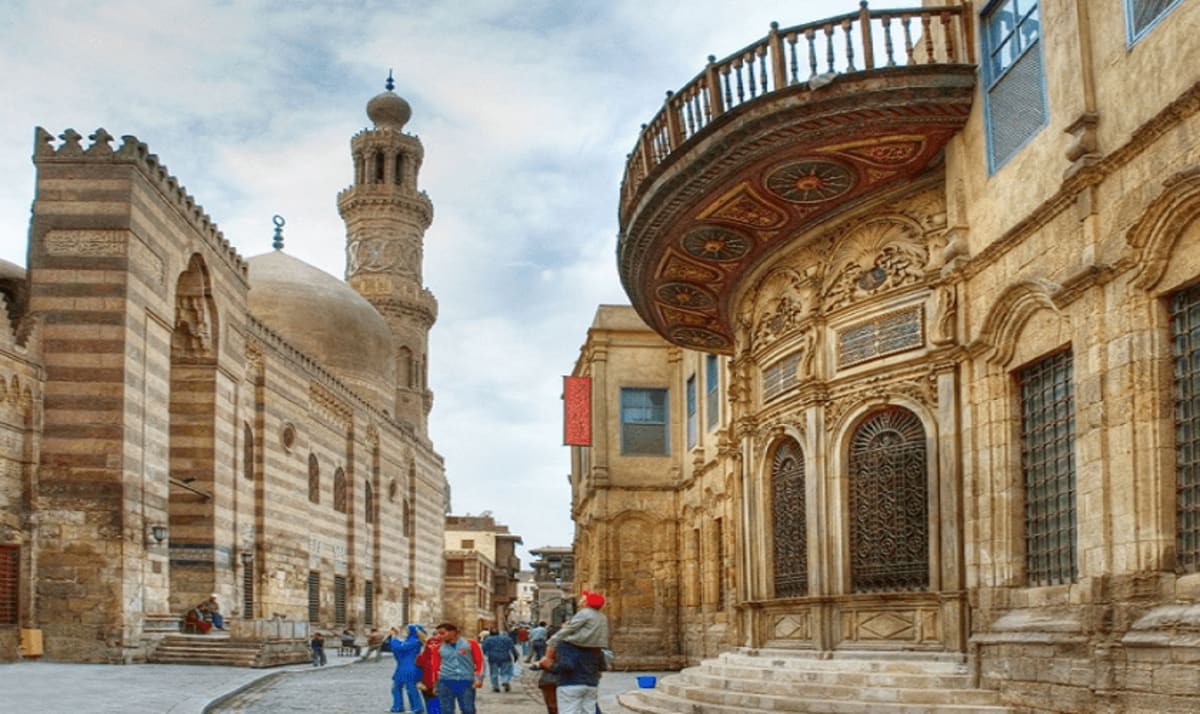
Join one of the Cairo urban walking tours run by local operators like Dubarah or Ziarat — not because you need a guide for the main sites, but because a 90-minute neighbourhood walk with a knowledgeable local Egyptian (many of them young women themselves) recalibrates your sense of the city faster than three days of solo exploration. Prices run $15–25 USD per person. Book via Instagram or WhatsApp — most small operators don't maintain formal websites.
Hidden Cairo
The Cairo that most visitors don't find is not hidden deliberately — it's just slightly off the line between the airport, the pyramids, and the Egyptian Museum.
Al-Darb al-Ahmar is the neighbourhood immediately south of Khan el-Khalili, running along the base of the old Ayyubid city wall. It's poorer, quieter, and more architecturally layered than the tourist quarter — Mamluk monuments in various states of restoration, workshop streets where craftspeople make furniture and metalwork, a community that has lived in the shadow of medieval Cairo for centuries. The Aga Khan Trust for Culture has been restoring this area for two decades; the results are extraordinary and almost entirely unvisited by tourists.
The Nilometer on Rhoda Island is a 9th-century stone shaft used to measure the annual Nile flood — a piece of hydraulic infrastructure that kept Egypt fed for a thousand years. It sits in a garden at the southern tip of Rhoda Island, costs almost nothing to enter, and on most visits you will have it entirely to yourself. Take a Uber to Rhoda Island and walk south.
Baron Empain Palace in Heliopolis is one of Cairo's great architectural oddities — a Hindu-inspired palace built in 1911 by a Belgian industrialist, now restored and open to visitors. It looks like it was designed by someone who had heard about Indian architecture but never seen any, which is exactly what happened. Entry is $3 USD. It is wonderful.
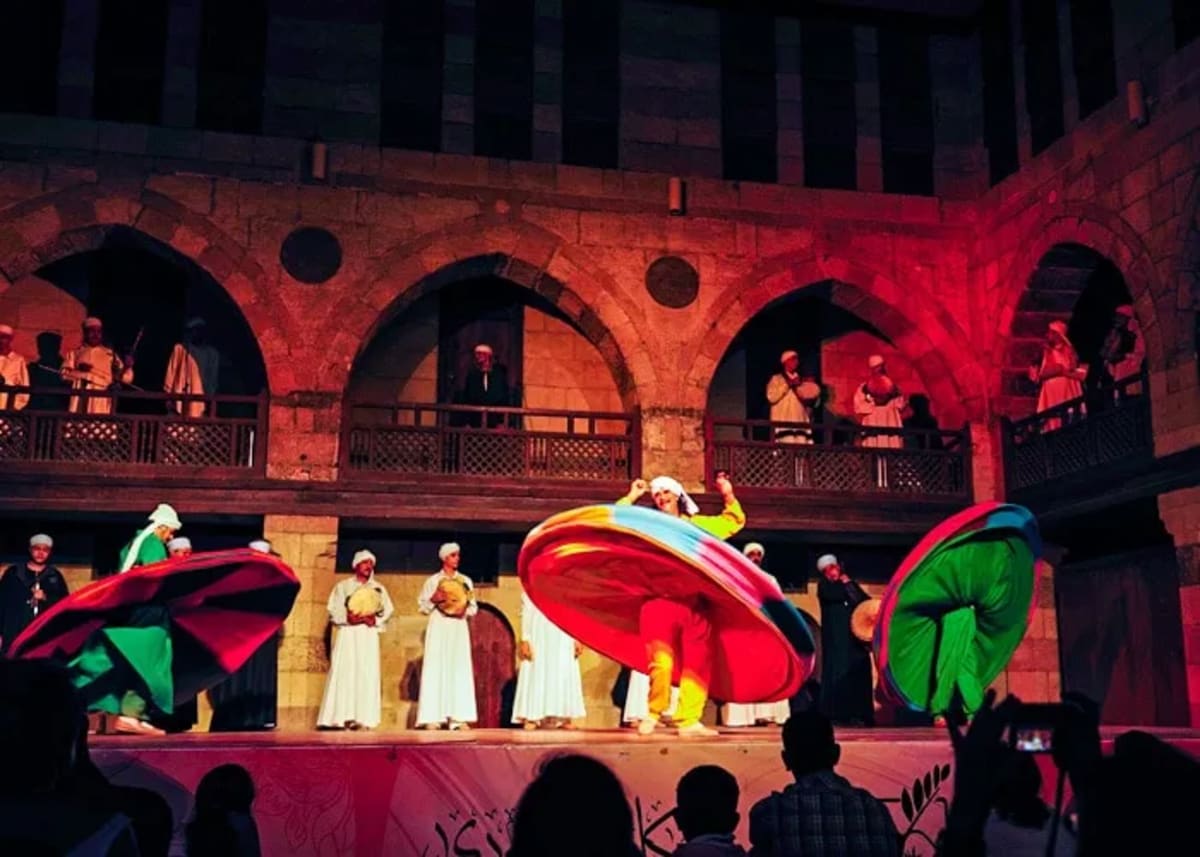
Wekalet el-Ghouri is a 16th-century Mamluk caravanserai in Islamic Cairo that hosts free Tannoura whirling dervish performances on Wednesday and Saturday evenings. The performance runs about 90 minutes, begins at 7pm, and requires arriving at least 30 minutes early for a seat. It is completely free, completely authentic, and almost entirely absent from standard tourist itineraries.
The Cairo Opera House on Gezira Island runs a full season of performances from October through June — Egyptian and international productions, classical music, ballet, and traditional Egyptian music. Ticket prices run $5–30 USD. The building itself, opened in 1988, is worth seeing; the Japanese government funded the construction as a gift to Egypt and the result is better than that description suggests. Check the schedule at cairoopera.org.
Quick Reference
The essentials at a glance.
| Best months to visit | October–November and February–March — mild temperatures, manageable crowds, competitive accommodation pricing |
| Worst months | July–August — extreme heat (40–45°C), humidity in the Delta, reduced operating hours at outdoor sites |
| Shoulder season | April–May and September — good weather, lower prices, fewer tour groups than peak winter |
Daily budget by tier (2026 estimates):
| Tier | Per day (USD) | Includes |
|---|---|---|
| Budget | $35–55 | Guesthouse bed, street food, metro, 1 paid site entry |
| Mid-range | $90–150 | 3-star hotel, restaurant meals, Uber transport, 2 site entries |
| Comfort/Luxury | $200–400+ | 5-star hotel, full-service dining, private transfers, skip-the-line access |
Key logistics:
| Visa | Visa on arrival ($25 USD) or e-visa at visa2egypt.gov.eg ($25 USD, 3–7 days processing) — available to most nationalities |
| Currency | Egyptian Pound (EGP). ATMs widely available. USD accepted at tourist sites and major hotels; change given in EGP |
| Crowd level | Giza: 5/5 at peak hours. Egyptian Museum: 3/5. Islamic Cairo mornings: 2/5. Coptic Cairo: 2/5 |
| Language | Arabic. English widely spoken in tourist areas, hotels, and Zamalek/Downtown |
| Safety | Generally safe for tourists with standard urban awareness. See dress and solo travel section for specific guidance |
| Electricity | 220V, Type C/F plugs (European standard). Universal adapter recommended |
| SIM card | Available at the airport on arrival — Vodafone Egypt and Orange both offer tourist SIMs with data from $5–10 USD for 10–20GB |
Top single tip: Arrive with more time than you think you need. Cairo is the only city in the world where you can stand at the base of a 4,500-year-old pyramid in the morning, eat the best falafel of your life at noon, walk through a medieval Islamic city in the afternoon, and watch the sun set over the Nile from a rooftop at dusk — and still feel, on the last day, that you've only just started.
EgyptBound exclusive
Ready to explore?
Book your flights and hotels through our verified local partners.