Dahab does not announce itself. It does not have an airport, a landmark you've seen on a poster, or a single thing that qualifies as a must-see in the conventional sense. What it has is a reef you can walk into from the beach, a desert that starts where the town ends, and an atmosphere of deliberate slowness that is extremely difficult to leave.
Most people arrive planning three nights and reassess on day two.
The town divides into two connected neighbourhoods along the promenade — Mashraba in the north, Masbat in the south — and you can walk the full length in twenty minutes. The main street behind the promenade has everything else: dive schools, kite shops, a pharmacy, a small supermarket, and the kind of local restaurants where the menu is written by hand and the cook is the owner's mother.
Dahab works best if you pick one main activity and let the rest happen around it. Come for diving, stay for the desert. Come for kite surfing, stay for the reef. Come to do nothing, and you will find that Dahab is extraordinarily well-designed for exactly that.
What nobody tells you
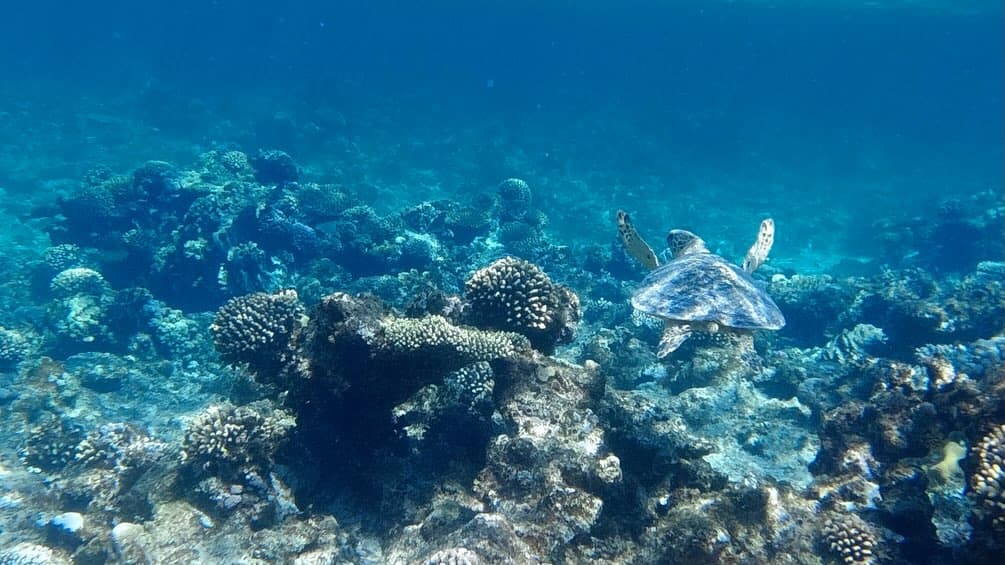
The reef is literally at your feet. In most of Dahab, the coral begins 10–20 metres from the shore. You do not need a boat, a tour, or any equipment beyond a mask and fins. The access is one of the most extraordinary things about the place and most people do not fully appreciate it until they are standing in ankle-deep water watching a reef shark cruise past.
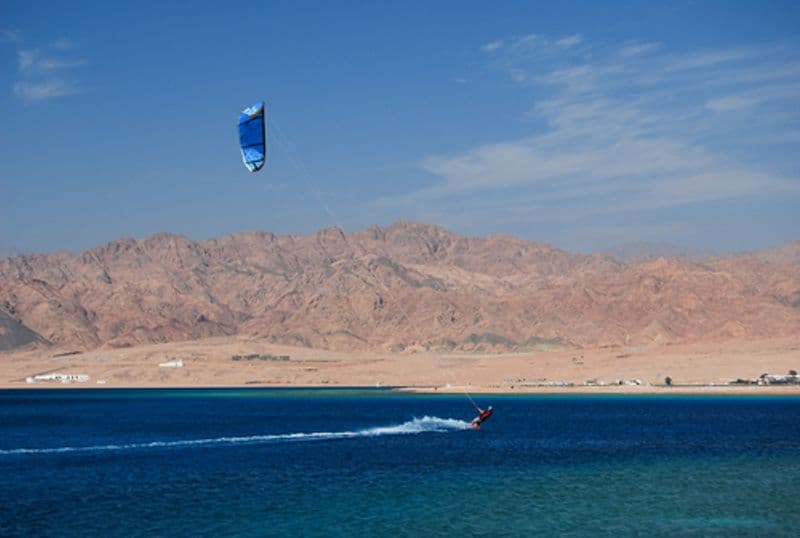
The wind is real. The Gulf of Aqaba channels strong, consistent wind — which is why the kite surfing is world-class and also why evenings on the promenade in March can require a layer. Pack one.
Digital nomads have discovered this place. Dahab now has genuinely reliable fibre internet in most guesthouses and several cafes, a small but active community of remote workers, and a pace of life that makes it extremely productive once you've adjusted. If you work remotely and have flexibility, a month here costs less than a week in most European cities.